
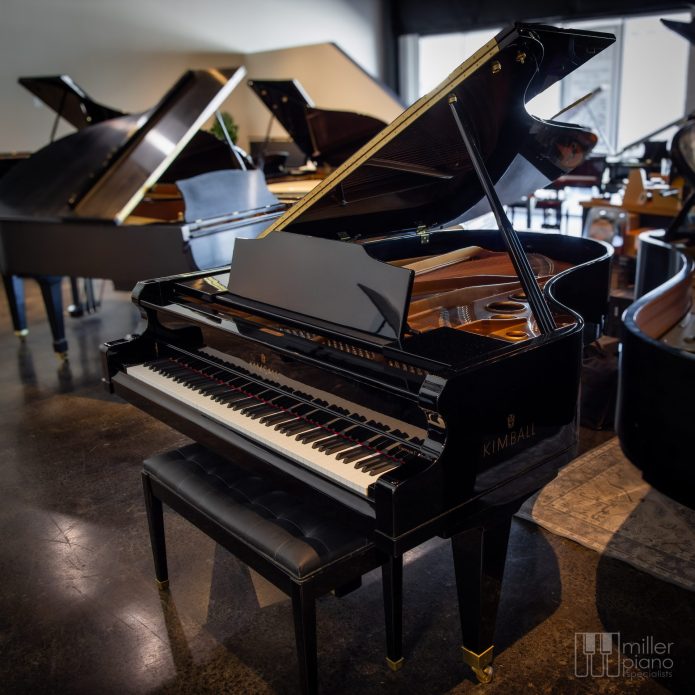
Most people do not associate Kimball with high-end performance. Kimball’s reputation is mixed, and for many players the name brings to mind strong cabinetry and uneven musical results across different eras.
That is exactly why the Kimball 670P Viennese Classic is worth your attention. In our Nashville showroom, this is the kind of piano that changes a buyer’s assumptions in the first few minutes.In the video below, Forrest walks you through why this piano exists, what makes it different, and what to listen for as he plays it so you can hear the bass and treble character for yourself.
Quick facts on the Kimball 670P (Viennese Classic)
- Model: Kimball 670P (Viennese Classic)
- Size: 6’7″ grand
- Why it is notable: A higher-tier Kimball grand built during the Viennese Classic chapter, designed to compete on tone and touch, not just furniture appeal.
Why the “Viennese Classic” line exists
Forrest explains it plainly in the video. In the broader used market, Kimball can feel up and down depending on the specific instrument, the era it came from, and how it was cared for. Some Kimball pianos are solid home instruments. Others are more cabinet-forward than performance-forward.
If you want the bigger-picture brand context first, read our Kimball history, serial numbers, and value guide.
Then there was a different chapter. Kimball’s ownership of a prestige European maker is part of the backdrop that shaped how the Viennese Classic line was positioned. The goal was straightforward. Build a more premium grand that stands on sound, response, and control. That is where the Viennese Classic story matters.
If you want the broader line-level explanation, read our Kimball Viennese Classic grand piano guide. And if you want to compare what we currently have available, browse our current Kimball inventory.
What the 670P is, and what it is not
Let’s be blunt, because buyers deserve clarity.
What it is
A serious 6’7″ grand from Kimball’s higher-tier Viennese Classic effort. That length matters. More string length and more soundboard real estate usually means stronger bass fundamentals, better projection, and more headroom when you push dynamics.
What it is not
- It is not a brand swap. This is still a Kimball, built to a different standard than what most people picture when they hear the name.
- It is not a Bösendorfer. Nobody should market it that way, and you do not need that comparison for this piano to make sense.
- It is not automatically “high-end” just because it says “Viennese.” Condition still matters, and it matters a lot.
This piano earns attention because of what it does musically when it is healthy, not because of internet mythology.
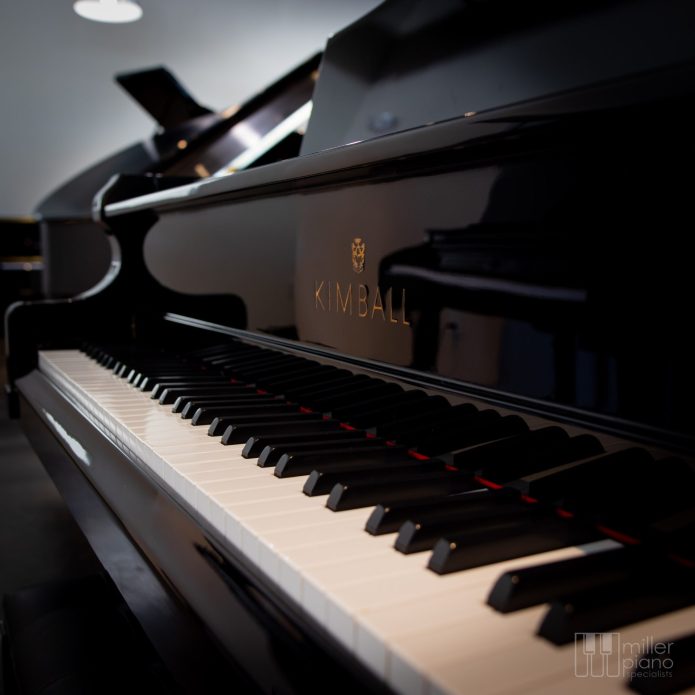
What makes this 670P feel “European-inspired”
In the video, Forrest highlights the cues he looks for when evaluating a grand. These are the details that separate a “pretty piano” from a performance-minded instrument.
1) Design choices that look more “concert” than “furniture”
Forrest points out build and design cues that matter to players, including what is happening inside the piano and why those choices show up in control and tone. This is not surface-level commentary. It is the kind of evaluation you want when you are trying to decide whether a used grand is truly worth buying.
2) The size
At 6’7″, this piano sits in a sweet spot. It is large enough to produce a warm, round bass and a bigger sound, without requiring a concert hall to make sense in a home.
3) The tone profile Forrest demonstrates
As he plays, he calls out what he is listening for and why it matters. You will hear him describe:
- Warm, round, rich bass
- Clear, punchy tone
- Crisp, bell-like highs
- A character that reads “European-inspired” in the way it speaks and sustains
That is exactly what you should listen for in the walkthrough.
What to listen for when you watch the video
Most people listen the wrong way when evaluating a piano from a clip. They focus on the melody. Do this instead:
- Bass clarity: Is the low end defined, or is it tubby and indistinct?
- Treble “ping” vs “glass”: Bell-like highs are good. Brittle highs are not.
- Evenness across registers: Does the sound change abruptly at break points?
- Decay and sustain: Do notes bloom and carry, or die quickly?
- Action response: Even from a short clip, you can often hear whether control and repetition are there.
If the video makes you curious, the real test is in person.
Buying a used Kimball 670P: what actually matters
If you are looking at any used Kimball grand, including a 670P, the brand story is secondary. Condition is the whole game.
Non-negotiables to inspect
- Tuning stability: pinblock health and tuning pin torque
- Soundboard and bridges: cracks are not always fatal, loose structure is
- Action wear: hammer grooves, regulation state, repetition consistency
- Humidity history: a great piano stored badly becomes a problem fast
- Quality of any rebuild work: “rebuilt” can mean anything if it is not documented
A used grand that needs major action work and structural correction is not a deal. It is a repair project with a price tag.
Why we pay attention to pianos like this
Pianos like the 670P matter because they break assumptions. Many shoppers have heard “Kimball is not a premium brand.” Then they sit down at a stronger example from a more performance-focused chapter and realize the name does not tell the whole story.
If you want to experience it properly, come play it and compare it side-by-side with other grands in a similar size range. That comparison is where the truth shows up.
We serve the Nashville area and much of Middle Tennessee, including Franklin, Brentwood, Hendersonville, Mt. Juliet, and Murfreesboro.
FAQ
The 670P is a 6’7″ grand.
No. It is a Kimball. The value of this piano is not in pretending it is something else. The value is in how it plays and sounds when properly maintained and prepared.
The name signals a higher-tier chapter aimed at a more refined, European-leaning concept of tone and response.
Some are, some are not. Kimball quality varies by era and by instrument. Condition and maintenance matter more than the name on the fallboard.